There’s a special kind of magic in the aroma of freshly baked bread wafting through your home. It’s comforting, inviting, and truly a delight for the senses. While store-bought loaves offer convenience, nothing quite compares to the taste and texture of homemade bread, crafted with care right in your own kitchen. For those who take their baking seriously, or simply crave consistently perfect loaves with minimal fuss, a professional bread maker isn’t just a gadget; it’s a game-changer. These aren’t your grandma’s basic bread machines; modern professional models offer an advanced baking experience, delivering results that rival artisan bakeries.
A Brief History and Evolution of the Bread Maker
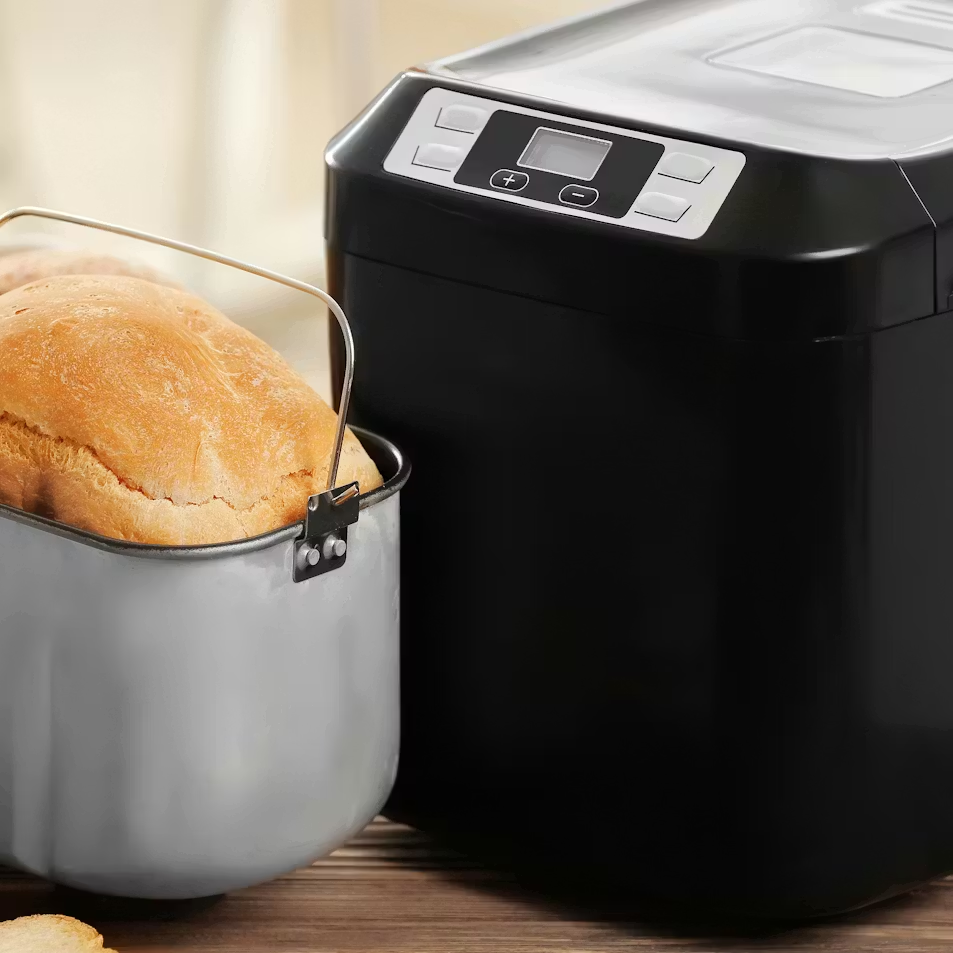
The bread machine first emerged in the late 1980s, promising an effortless way to enjoy homemade bread. Early models were revolutionary for their time, automating the entire process from mixing to baking. However, they often produced oddly shaped loaves, sometimes with a dense crumb and an uninspiring crust. Fast forward to today, and the landscape of bread makers has transformed dramatically. Fueled by a renewed passion for home cooking and a desire for healthier, customizable food options, manufacturers have responded with sophisticated machines that prioritize performance, versatility, and user experience. The “professional” label now signifies a new breed of bread maker, designed for discerning home bakers who demand exceptional quality and a broader range of functionalities.
What Defines a Professional Bread Maker?
When we talk about a professional bread maker, we’re typically referring to high-end home models engineered to produce superior loaves with consistency and precision. These machines go beyond basic functionalities, incorporating features that significantly impact the final product’s quality.
Here’s what sets them apart:
- Dual Kneading Paddles: Many top-tier models, like the Zojirushi Home Bakery Virtuoso Plus, feature two kneading paddles. This design ensures more thorough and even mixing and kneading of dough, especially in elongated, rectangular pans, leading to better gluten development and a more consistent crumb structure.
- Optimal Loaf Shape: Unlike the tall, often “tree-stump” shaped loaves from older or more compact machines, professional bread makers often produce rectangular loaves that are ideal for slicing and making sandwiches.
- Even Heating Elements: Some advanced machines include secondary heating elements, such as one in the lid, to promote uniform baking and browning of the crust on all sides of the loaf. This prevents the pale, patchy crusts sometimes associated with standard bread machines.
- Robust Materials and Build: Professional models frequently boast stainless steel construction, which not only looks sleek but also indicates durability and a higher quality build designed for longevity.
- Advanced Programming and Customization: Expect a wide array of pre-programmed settings for various bread types (white, whole wheat, French, gluten-free, sweet, rapid bake) and specialized doughs (pizza, pasta, sourdough starter). More importantly, they often allow for custom programming, giving you control over kneading, rise times, and bake cycles to fine-tune recipes or experiment.
- Automatic Dispensers: For bakers who love adding fruits, nuts, or seeds, an automatic dispenser ensures these ingredients are incorporated at precisely the right moment, preventing them from being crushed or over-mixed.
“A professional bread maker empowers you to be the baker you always wanted to be, seamlessly transforming simple ingredients into extraordinary loaves with precision and ease,” says seasoned baker Anya Sharma. “It’s about consistent quality and unlocking creative possibilities without the labor.”
Essential Ingredients and Tools for Machine Baking
To truly harness the power of your professional bread maker, you’ll need a few basic, high-quality ingredients and perhaps a couple of handy tools.
Basic Ingredients:
- Flour: Bread flour is often recommended for its higher protein content, which contributes to better gluten development and a chewier texture. However, professional machines handle all-purpose flour, whole wheat flour, rye flour, and specialty gluten-free blends with ease.
- Yeast: Instant yeast or active dry yeast are typically used. Always check your recipe and yeast expiration date, as yeast is a living organism crucial for proper rise.
- Liquids: Water or milk are common. Ensure they are at the correct temperature as specified in your recipe, as this impacts yeast activation.
- Sweetener: Sugar, honey, or maple syrup feed the yeast and contribute to flavor and crust browning.
- Salt: Essential for flavor and controlling yeast activity.
- Fat: Butter, oil, or margarine add richness, tenderize the crumb, and improve shelf life.
Necessary Tools:
- Kitchen Scale: For consistent results, especially with a professional bread maker, weighing ingredients (especially flour) is far more accurate than using volume measurements.
- Measuring Cups and Spoons: Still useful for liquids and smaller quantities.
- Rubber Spatula: Handy for scraping down the sides of the pan during initial mixing, if needed.
- Dough Cloth/Scraper: For stubborn sticky bits during cleanup.
Mastering Your Professional Bread Maker: A Step-by-Step Guide
Using a professional bread maker is incredibly straightforward, making the joy of fresh bread accessible to everyone. Here’s a general guide:
- Add Ingredients in Order: Most manufacturers recommend adding wet ingredients first (water/milk, melted butter/oil), followed by dry ingredients (flour, sugar, salt), with the yeast added last, often in a small well on top of the flour, away from direct contact with liquids or salt, especially if using a delay timer. This prevents premature yeast activation.
- Select Your Program: Choose the appropriate setting for your recipe (e.g., “Basic White,” “Whole Wheat,” “Gluten-Free,” “Dough”). Don’t forget to select your desired crust color (light, medium, dark) and loaf size, if your machine offers these options.
- Start the Machine: Press the start button and let your professional bread maker do its magic. It will handle the mixing, kneading, proofing (rising), and baking cycles automatically.
- Listen for Add-Ins (if applicable): If your recipe calls for additional ingredients like nuts or fruits, the machine will usually beep to signal when it’s time to add them to the automatic dispenser.
- Remove and Cool: Once the cycle is complete, carefully remove the bread pan using oven mitts. Invert the pan to release the loaf onto a wire rack. Allow the bread to cool completely for at least an hour before slicing. This is crucial for texture and ease of slicing.
Tips, Tricks, and Recipe Variations
Your professional bread maker is a versatile tool for culinary exploration.
- Experiment with Flours: Beyond white and whole wheat, try blends with spelt, oat flour, or bread machine-specific gluten-free mixes.
- Flavor Boosts: Add herbs (rosemary, thyme), spices (cinnamon, cardamom), cheese, olives, sun-dried tomatoes, or roasted garlic for endless variations.
- Sweet Breads: Use your machine to make delicious sweet loaves like cinnamon swirl, banana bread, or cranberry-orange bread.
- Dough Only: Many professional models have a “Dough” cycle. Use this to prepare dough for pizzas, focaccia, dinner rolls, or even pasta, then shape and bake in your conventional oven.
- Sourdough Adventures: Some advanced machines even have settings for cultivating sourdough starter or baking sourdough loaves. While they might not achieve the super-crusty exterior of a Dutch oven bake, the flavor will be delightful.
- Troubleshooting Dense Loaves: If your bread is dense, check your yeast’s freshness, ensure accurate ingredient measurements (using a scale helps!), and verify that liquids are at the correct temperature. A too-dry dough often results in dense bread.
The Undeniable Benefits of Homemade Bread with a Machine
Investing in a professional bread maker offers a wealth of advantages:
- Unmatched Freshness: There’s no substitute for bread made minutes or hours ago. The taste and aroma are simply superior.
- Ingredient Control: You decide exactly what goes into your bread, avoiding preservatives, artificial flavors, and excessive sugar or salt often found in store-bought options. This makes it ideal for managing dietary needs or allergies.
- Cost-Effective: While there’s an initial investment in the machine, making bread from scratch can be more economical in the long run, especially if you bake regularly or frequently buy artisan loaves.
- Minimal Effort, Maximum Reward: The beauty of a bread maker is its “set-it-and-forget-it” convenience. It handles all the labor-intensive steps, freeing you up to do other things while your kitchen fills with the scent of baking.
- Versatility: From basic sandwich loaves to specialized doughs and even jams, a professional bread maker can handle a surprising array of recipes.
- The Joy of Creation: There’s immense satisfaction in pulling a warm, perfectly baked loaf from your machine, knowing you created it.
Savoring Your Handiwork: Enjoying Homemade Bread
Once your magnificent loaf has cooled, the real fun begins! Homemade bread is incredibly versatile.
- Simple Pleasure: Enjoy thick slices with a smear of butter, your favorite jam, or a drizzle of honey.
- Sandwich Perfection: Build gourmet sandwiches with fresh fillings; the sturdy texture of homemade bread holds up beautifully.
- Toasting and Spreading: Transform slices into golden toast for breakfast, topped with avocado, eggs, or cream cheese.
- Accompaniments: Serve alongside soups, stews, or salads. It’s perfect for soaking up rich sauces.
- Creative Uses: Stale bread can become fantastic croutons, breadcrumbs, or French toast.
Frequently Asked Questions About Professional Bread Makers
Q: How is a professional bread maker different from a regular one?
A: A professional bread maker typically offers advanced features like dual kneading paddles, rectangular loaf pans for traditional shapes, top heating elements for even crust browning, more robust construction, and extensive customizable programming options, leading to consistently higher-quality results than basic models.
Q: Can I really make artisan-quality bread in a bread machine?
A: While a bread machine might not replicate the exact oven spring or crackling crust of a professional brick oven, high-end professional bread makers produce loaves with excellent texture, crumb, and flavor that come remarkably close to artisan bread, especially with the right recipes and customization.
Q: Is it hard to clean a professional bread maker?
A: Most bread pans in professional bread makers feature nonstick coatings, making cleanup relatively easy with warm, soapy water. While the kneading paddles can sometimes stick, overall maintenance is minimal compared to traditional baking.
Q: Do I need special flour or yeast for a professional bread maker?
A: No, professional bread makers are designed to work with standard all-purpose or bread flour and common instant or active dry yeast. However, using high-quality ingredients can always enhance your results.
Q: Can I use my bread maker to make gluten-free bread?
A: Absolutely! Many professional bread makers include dedicated gluten-free settings, which are optimized for the unique requirements of gluten-free doughs, ensuring a better rise and texture.
Q: Are professional bread makers worth the higher price tag?
A: For serious home bakers, those who bake frequently, or anyone seeking consistent, high-quality results with minimal effort, the investment in a professional bread maker is often well worth it due to its durability, versatility, and superior performance.
The Final Knead
Choosing a professional bread maker is an investment in your home, your health, and your culinary passion. It simplifies the art of bread making, turning what was once a time-consuming task into an effortless joy. With its advanced features, customizable programs, and ability to consistently produce delicious, bakery-quality loaves, a professional bread maker truly elevates your home bakery. So go ahead, explore the possibilities, and experience the unparalleled satisfaction of warm, fresh bread, made by you, for you. Your kitchen (and your taste buds) will thank you!
|
Our Picks for the Best Bread Maker in 2026
As an Amazon Associate I earn from qualifying purchases.
|
||
| Num | Product | Action |
|---|---|---|
| 1 | Cuisinart Bread Maker Machine, Stainless Steel Automatic Bread Machine with 12 Menu Options, 3 Loaf Sizes up to 2 Lb., 3 Crust Colors, Removable Nonstick Baking Pan & Kneading Paddle, CBK-110NAS |

|
| 2 | Cuisinart Bread Maker Machine, Stainless Steel Convection Bread Machine with 16 Menu Options, 3 Loaf Sizes Up to 2 Lb., 3 Crust Colors, Includes Measuring Cup, Spoon & Kneading Hook, CBK-210 |
|
| 3 | Amazon Basics Programmable Bread Maker, 2 Pound Non-Stick Automatic Bread Making Machine, 14 Settings for Breads, Doughs, Gluten-Free Options and More, LCD Display, White |
|
| 4 | Neretva Bread Maker, 20-IN-1 2LB Bread Machine Dual Heater Bread Maker Machine Automatic with Nonstick Ceramic Pan, 15H Timer & 1H Keep Warm Set, Low Noise, Stainless Steel Breadmaker Recipe-Green |
|
| 5 | 2LB Bread Maker Machine, OSIPOTO 17 in 1 Automatic Stainless Steel Bread Machine, Non-stick, Beginner-Friendly Controls, 15 Hour Timer, Easy to Clean Low Noise, High Success Rate for Homemade Bread |
|
| 6 | Rosewill 25-in-1 Automatic Bread Maker Machine with 3 Loaf Size up to 2 Lb, 700W High Power Dual Heater Bread Maker with BPA-free Nonstick Coating Pan, Max 15 Hours Delay Timer, Low Noise - Gray |
|
| 7 | Elite Gourmet EBM8103M Programmable Bread Maker Machine 3 Loaf Sizes, 19 Menu Functions Gluten Free White Wheat Rye French and more, 2 Lbs, Mint |
|
| 8 | KITCHENARM 29-in-1 SMART Bread Machine with Gluten Free Setting 2LB 1.5LB 1LB Bread Maker Machine with Homemade Cycle - Stainless Steel Breadmaker with Recipes Whole Wheat Bread Making Machine |
|
| 9 | Elite Gourmet EBM8103B Programmable Bread Maker Machine 3 Loaf Sizes, 19 Menu Functions Gluten Free White Wheat Rye French and more, 2 Lbs, Black |
|
| 10 | KBS Pro 710W Bread Maker, 2LB 17-in-1 Automatic Bread Machine with Healthy Ceramic Pan, Nut Dispenser, Tempered Glass Touch Panel, Stainless Steel Housing,3 Crust Colors, 15H Timer&Keep-Warm, Recipe |
|